
Blanco County Release Meanings
A Blanco County jail exit can describe freedom, a change in legal status, or a move to another custodian. Community release may follow a cash or surety bond, personal bond, dismissal, court order, credit for time served, or completion of a county sentence. Probation can begin after the person leaves physical custody. Parole and mandatory supervision apply to people released from the Texas prison system under conditions. By contrast, transport from the Blanco County Jail to another county, TDCJ, the U.S. Marshals Service, or ICE is continued custody.
The distinction determines which record matters. The Blanco County Sheriff records the physical jail exit. The court file explains the judicial event. TDCJ records state-prison custody and later parole or discharge. Federal systems cover federal or immigration custody only. A name disappearing from a live population is not enough. A release record should identify the manner and destination before anyone describes the person as free from custody.
- Discharge
- The end of the sentence obligation, not merely release under supervision.
- Time served
- A court credits custody already completed toward the ordered term.
- Detainer
- A request or hold that may send a person to another agency.
- Parole
- Conditional community release while a prison sentence continues.
Blanco County Release Routes
Each route leaves a different trail. The Sheriff entry is the anchor for a person booked into the Blanco County Jail, but the next source depends on the release code and destination. Do not turn a transfer code into a community release or treat bond as a final case result.
| Route | Meaning | Next record |
|---|---|---|
| Bond or court order | Physical release while a case may remain open | Sheriff exit entry and court bond order |
| Dismissal or time served | A court action may end the present confinement | Signed order or judgment plus release timestamp |
| Probation | Community supervision ordered by a court | Court and 33rd/424th CSCD records |
| TDCJ transfer | Continued custody in the state system | TDCJ inmate information |
| Federal or ICE transfer | Continued custody under another authority | BOP, USMS, ICE, or federal court record |
Parole approval is also not the gate event. Texas parole panels review files and may vote for release with conditions, programs, or a future month. The Sheriff or TDCJ status record must still show what happened. Actual release, projected release, parole eligibility, and a favorable vote are separate facts.
Blanco County Release Record Fields
No public Blanco County schema confirms a fixed list of release fields. A narrow request should ask for the fields needed to identify the booking, show the exit, and follow any transfer. This avoids publishing a fictional sample form and gives the custodian a clear date range and subject.
| Field to request | What it can establish |
|---|---|
| Name and identity data | Whether the entry belongs to the right person |
| Booking number and timestamps | The local custody episode tied to the release |
| Charges, court, and case number | The file that may explain the legal outcome |
| Bond entries | Whether a bond was recorded and its type |
| Release date and time | When the person left the Sheriff’s physical custody |
| Release manner or destination | Community exit, transfer, or receiving agency |
| Booking photograph | The releasable image associated with that booking |
Ask for a code key when an unexplained internal code appears. The court judgment is complementary, not interchangeable. It can show dismissal, sentence, jail credit, probation, revocation, or a commitment to TDCJ, while the jail entry supplies the physical movement and time.
Request Blanco County Release Records
The Blanco County public-information page is the durable written route. Its form asks for the requester’s name, full mailing address, phone number, and a specific description. Inspection is often free. The county explains that an estimate over $40 triggers an itemized written estimate and a response deadline, while a qualifying estimate may require a deposit. These cost steps do not promise disclosure on a fixed day.
- Name the person and give a booking number or date range if known.
- Ask for booking and release timestamps, release manner, destination, charges, bond fields, transfer records, and the releasable booking photograph.
- Submit through the county’s online route, by mail to the Public Information Office, or by an accepted in-person method. Fax requests ended in 2024.
- Review any estimate and narrow broad wording if it captures records that do not answer the release question.
- Compare the response with the latest signed court order and follow any named receiving agency.
400 US Highway 281 South
Johnson City, TX 78636
830-868-7104
The Sheriff page does not publish a separate release desk, records extension, office hours, or jail-specific fee schedule. A phone call can help with status triage, but a written response creates the lasting record. No official retention period for released entries was found, so request the archival booking/release record rather than relying on how long a name stays visible.
Texas Law on Blanco Releases
Texas Government Code Chapter 552 supplies the Public Information Act framework. Section 552.021 creates the general access rule, subject to exceptions, and Section 552.221 calls for prompt production within a reasonable time. Prompt does not mean that every record must be produced within ten business days. Law-enforcement exceptions, private identifiers, court orders, and an Attorney General ruling process can affect the response.
A restricted or missing result does not prove that no record existed. Expunction, nondisclosure, juvenile confidentiality, retention, or an identity mismatch may control access.
Texas expunction is governed by Code of Criminal Procedure Chapter 55A. Nondisclosure is governed by Government Code Chapter 411, Subchapter E-1. Neither remedy should be assumed from a blank screen. Juvenile records follow Family Code Chapter 58. Ask the custodian whether access is restricted and rely on a court order only when it is lawfully available.
Blanco Bond Release Proof
A bond release produces more than one useful record. The Blanco County Clerk links a motion used to seek release of cash-bond funds, while the multi-county 33rd/424th CSCD documents a bond-supervision caseload. Neither is the jail exit timestamp. The court record establishes the bond terms, the Sheriff record establishes the physical exit, and CSCD can address active bond supervision.
Return of deposited cash is also a different event from release of the person. A funds motion may be filed or granted after custody changed. Read the signed bond order and current docket, then request the jail entry instead of inferring an exit time from the money record.
Blanco Release Statistics Limits
A December 2021 Texas Commission on Jail Standards report listed a capacity of 56, an average daily population of 18, and an incarceration rate of 1.58 for a county population of 11,374. Its average covered a historical period and counted county residents held both locally and elsewhere under stated inclusion rules. It is not a current release count.
Those figures give dated operating context only. They do not reveal how many people left custody, why they left, or where they went. A release total would need a booking/release dataset with defined dates and rules.
Find Blanco County Released Inmates
Blanco County has no verified official rolling release list or public release archive. The strongest search is therefore a sequence that starts locally and follows the documented custody path. Match at least two identifiers, such as date of birth, middle name, booking number, TDCJ number, SID number, or case number.
- Check the Blanco County Sheriff page and its VINELink route for current custody status.
- Request the Sheriff booking/release entry, including manner and destination.
- Read the correct court file: District Clerk for a felony, County Clerk for a county misdemeanor, or the proper justice court for a Class C case.
- Use TDCJ only when the person entered state custody. Its public online search covers people currently incarcerated, not a full list of discharged former inmates.
- Check the Austin I parole office or CSCD when the record indicates supervision.
- Use BOP, USMS, or ICE only after a record points to federal or immigration custody.
A person can leave the local population because of transfer or out-of-county boarding. Disappearance alone is not proof of community release.
The absence of an official feed is covered in the Blanco County 24-Hour Releases workflow. It explains how to frame a bounded request rather than substituting a commercial list.
Blanco TDCJ Release Searches
The TDCJ online inmate search accepts last name, first name, TDCJ number, SID number, gender, and race. TDCJ states that online information is at least 24 hours old, updates on working days, and includes only people currently incarcerated in a TDCJ facility. It cannot serve as a complete historical discharge search.
| Search field | Best use |
|---|---|
| TDCJ number | Direct match when the seven-digit number is known |
| SID number | State identification match |
| Last and first name | Broader search requiring identity checks |
| Gender and race | Filters for narrowing similar names |
When a former state inmate no longer appears, TDCJ’s email information route can return incarceration information and a projected release date. Give the full name and TDCJ number, or exact birth date, approximate age, and conviction county. The ordinary email response is free but does not supply photographs. Active parole status belongs with the assigned district parole office.
The official search screen shows the fields used for a current TDCJ match.
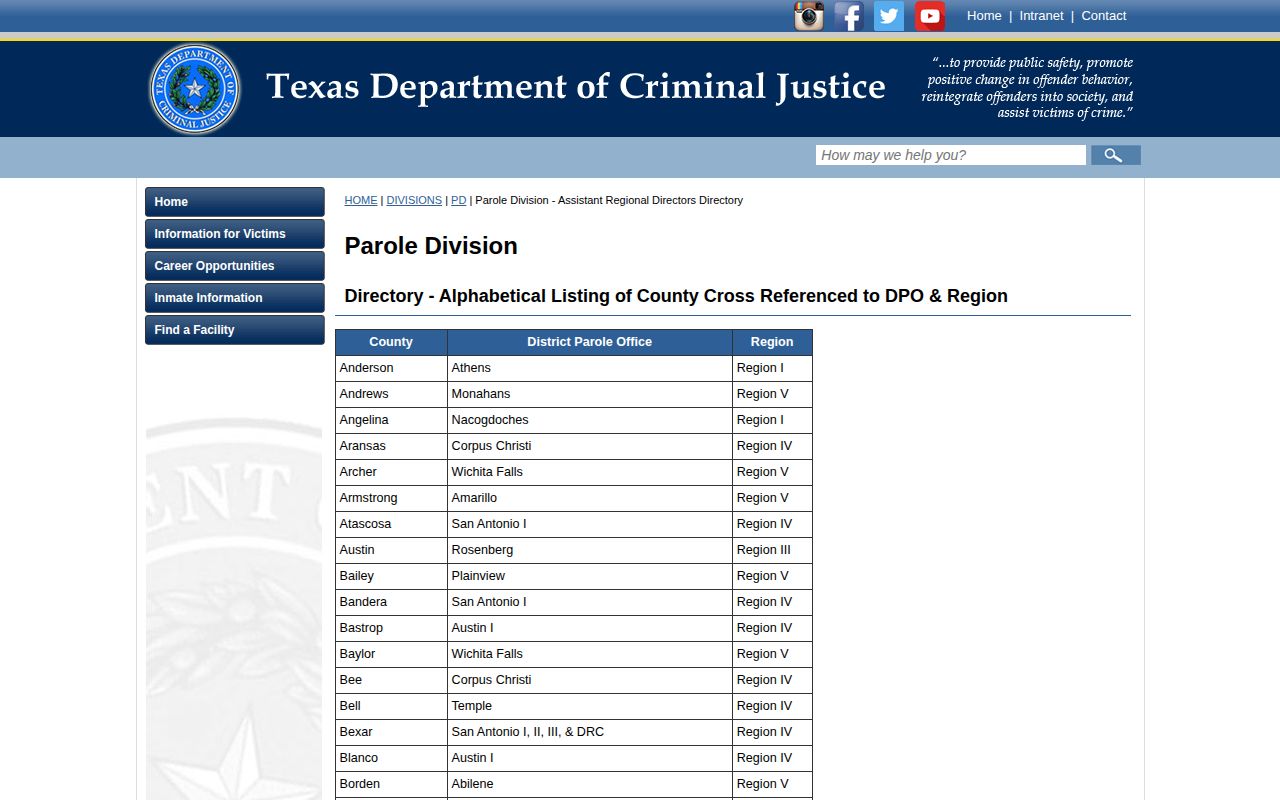
The screen should be read with its update warning. A blank result after release must be followed through TDCJ information, parole, and court records.
Blanco Release Court Records
Courthouse renovation changes the practical route. The District Clerk says its own public terminal is temporarily unavailable at the Cypress location, while a terminal or login is available through the County Clerk. The linked Kofile collection is largely historical, with identified volumes ending in the twentieth century. It cannot confirm a recent release.
For a current felony judgment, submit the District Clerk form with the subject’s name, birth date, and search span. The published search fee is $5. The office lists set copy and certification charges, but users should confirm totals and the temporary location before ordering. County misdemeanor files begin with the Texas Online Records portal and then the County Clerk for the actual signed document.
The official county-linked court portal is a current entry point for disposition research.
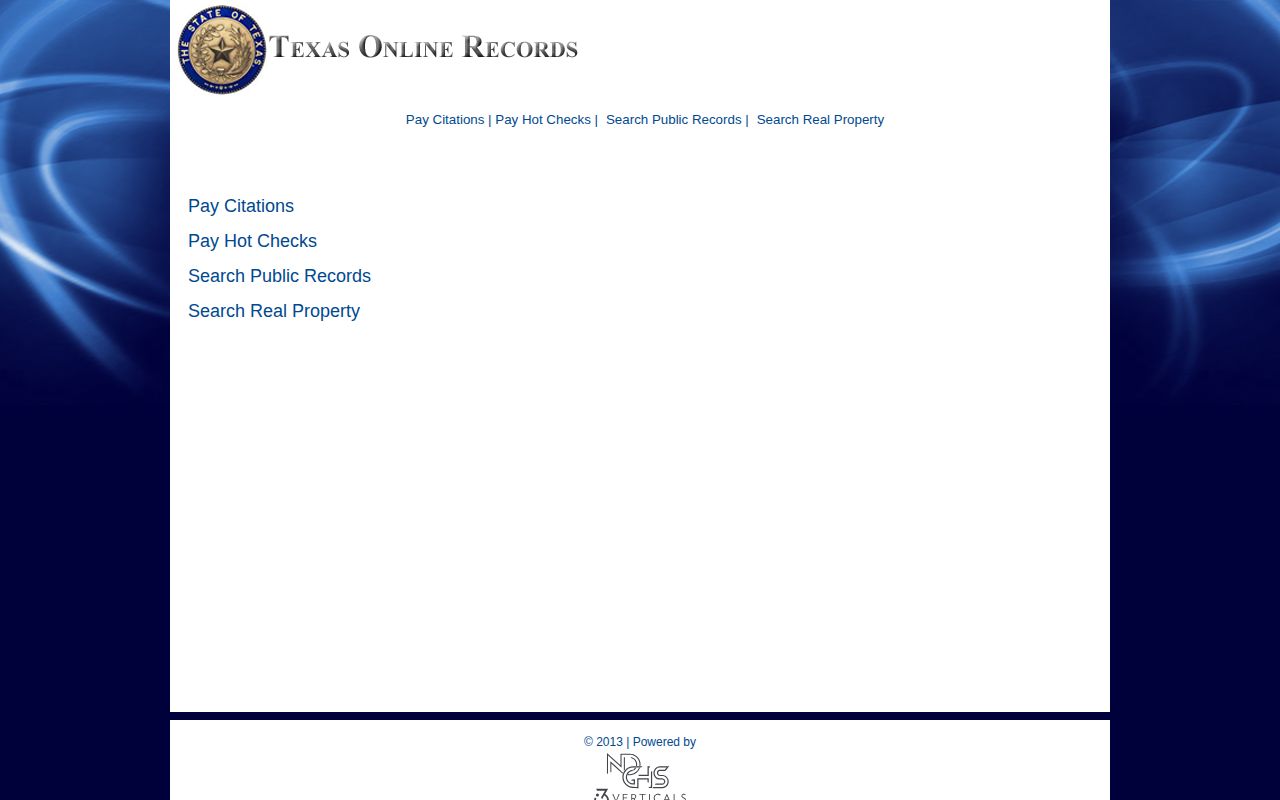
A docket label is a lead. Obtain the judgment, order, or dismissal before stating why the person left jail.
Blanco Post-Release Supervision
Parole and probation use different offices. TDCJ maps Blanco County parole and mandatory-supervision cases to Austin I District Parole Office in Region IV. Probation, community supervision, and bond supervision remain connected to the sentencing court and the 33rd/424th Judicial District CSCD. Calling one office and labeling its answer as the other form of supervision creates a false record.
The current CSCD headquarters source lists 220 South Pierce Street in Burnet and 512-756-5473. The assigned office should verify whether a person is on community supervision, parole, mandatory supervision, or bond supervision before any status is described.
Blanco Release Resource Center
An official 2021 community resource guide described the Blanco County Community Resource Center at 206 Highway 281 South as a central link to health and human services. It also placed adult-probation contacts at that site. The guide is historical, so the address and availability must be checked by phone before a visit.
The 2024 CSCD headquarters source is newer and should control for supervision contact. The older guide still explains why someone may see the Johnson City address in local material, but it is not a promise that a service or officer remains there.
Blanco Release Alerts and Transfers
The Blanco County Sheriff page directly links VINELink for custody status. Search one person, compare available identifiers, and preserve the exact status or event label. Register for a release or custody-change alert only when the matched agency record offers it. A VINE message is a prompt to verify with the Sheriff, TDCJ, or court. “Out of custody” from one agency can still mean transfer.
Federal tools apply only when a record identifies federal custody. The BOP Inmate Locator may show a historical “Released” status and date for federal inmates from 1982 onward. USMS handles many pretrial federal prisoners but has no comparable public historical release list. The ICE detainee locator focuses on present immigration detention and is not a release certificate.
Blanco Custody Status Sources
Use the system that held the person at the relevant time. A current-custody tool answers a different question from an archival release record, and a county record cannot prove the end of later state or federal custody.
| Source | What it covers | Released-person use |
|---|---|---|
| Blanco County Sheriff | Local booking and physical exit | Request release manner, time, and destination |
| Blanco courts | Bond, judgment, sentence, dismissal, probation | Explains the legal event |
| TDCJ | State offenders received by TDCJ | Use PIA, offender information, or parole route after online disappearance |
| VINELink | Participating agency events | Person-specific alert to verify |
| BOP | Federal inmates | May retain a released status and date |
| ICE | Present immigration detention | No-result does not prove release |
Blanco’s Old Jail Confusion
The limestone jail built in 1894 at Seventh Street and Avenue G is not the current release-record office. Historical sources describe its construction after use of courthouse-basement confinement and an 1897 jailbreak. The building was later outgrown and restored for county offices and emergency operations.
Current release inquiries go to the Sheriff facility on US Highway 281 South. An old address or historic photograph can misdirect someone seeking a recent booking. Confirm the active facility before sending a request or planning an in-person visit.
Blanco Out-of-County Transfers
The county’s fiscal 2025–26 budget includes appropriations for out-of-county prisoner boarding and prisoner transport. A historical 2022 interlocal packet also shows that cross-county arrangements have existed with Llano. Neither source proves that a named person went to Llano or that the old agreement remains the current route.
Ask for the receiving agency on the individual release or transfer entry. Then contact that custodian and use its locator. This extra step is vital in Blanco County because removal from the local population may reflect transport, not release to the community.
Blanco County Release Facility
The Facility Map supports one local detention page: Blanco County Jail. The Sheriff operates the county jail and holds the primary local booking and release entry. Community exits, transfers to another jail, and delivery to TDCJ all begin with that local record, but only the first category necessarily ends physical custody.
No separately licensed municipal jail, TDCJ prison, BOP institution, or dedicated ICE detention center was verified inside Blanco County. Municipal arrests can still lead to booking at the county jail. State, federal, and immigration systems remain access channels when an individual record shows a transfer, not extra local facilities.